
Malibu: water, sewer and permits
The City of Malibu was incorporated on March 28, 1991, and covers 19.83 square miles with 21 miles of Pacific coastline. Pacific Coast Highway strings it together, from Trancas and Zuma Beach in the west, past Point Dume, Malibu Colony and the Civic Center, to Carbon Beach, Big Rock and Las Flores in the east. Behind the beaches the canyons climb into the Santa Monica Mountains: Trancas, Zuma, Ramirez, Latigo, Corral, Malibu Creek, Carbon and Las Flores. Malibu Pier dates from 1905 and the Adamson House from 1929, and Surfrider Beach became the first World Surfing Reserve in 2010. Unincorporated Topanga lies to the east, the mountains to the north and the county line to the west.
According to the US Census (ACS 2020-2024 5-year estimates), Malibu has about 6,400 housing units, with a median construction year of 1976; 60 percent went up before 1980, and 62 percent are detached single-family houses. Mobile homes make up about 14 percent of the total, and their supply and drain lines usually run beneath the floor, out of sight. Fire has reshaped the city as well: the 2018 Woolsey Fire destroyed at least 488 single-family homes here, the Franklin Fire, which started in Malibu Canyon on December 9, 2024, destroyed 20 structures, and the January 2025 Palisades Fire destroyed 720 structures in the city. Older houses now stand next to rebuilds with brand new plumbing.
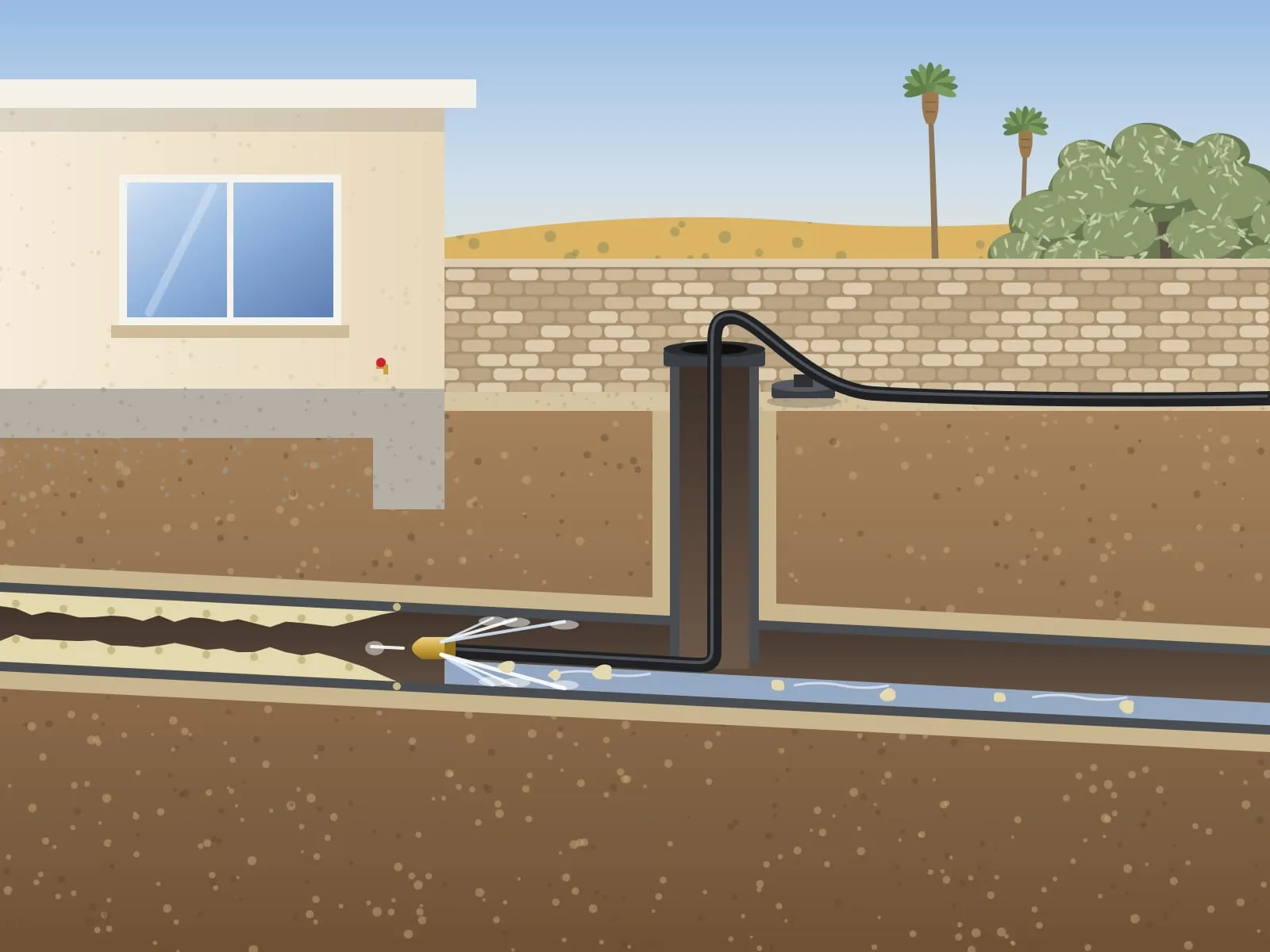
Septic is the rule here. Malibu has about 6,000 septic systems, and the City has regulated them with its own program since it incorporated. Every new system needs an operating permit, and an existing one needs a permit when the house is sold, when the system is repaired under a septic repair permit, or when the owner takes out a short-term rental permit. Inspections are done by a City-registered inspector. A conventional home system is permitted for 5 years and an advanced one for 3, a buyer without a permit has 180 days to get one, and cesspools are banned. In the Civic Center area septic systems are not allowed at all; the City's Civic Center Wastewater Treatment Facility opened its first phase in October 2018, and Pepperdine and the Malibu Mesa tract are served by a small County plant. Across the rest of Malibu a slow drain has two likely sources: the line from the house to the tank, or the septic system itself.
Water comes from Los Angeles County Waterworks District No. 29, formed in 1959. It buys all of its water from the West Basin Municipal Water District and pumps it along a 35-mile main beside Pacific Coast Highway into 44 hillside reservoirs. Hardness depends on the Metropolitan plant feeding it: in 2025, water from the Weymouth plant averaged 234 mg/L (13.7 grains per gallon) and water from the Jensen plant 140 mg/L (8.2). The District's 2024 inventory turned up no lead or galvanized service lines that need replacing. SoCalGas supplies the gas, and after a fire only SoCalGas restores service. Plumbing permits come from the City's Building Safety Division at City Hall, 23825 Stuart Ranch Road, through the online Malibu Development Portal, and septic work is reviewed by Environmental Health at City Hall. Our line is answered at any hour for every part of Malibu.
Neighborhoods we come to
- Trancas
- Zuma Beach
- Point Dume
- Latigo Canyon
- Corral Canyon
- Malibu Colony
- Civic Center
- Carbon Beach
- Big Rock
- Las Flores
ZIP codes in Malibu we cover
- 90265